
 EN



In modern industrial automation and machine building, purchasing decisions directly govern equipment uptime, operational safety, and overall lifecycle profitability. When sourcing hardware, prioritizing the lowest initial quote is a tempting approach. However, evaluating an industrial control parts cost strictly through upfront purchase pricing conceals severe downstream liabilities. A low-price component that fails prematurely or introduces operational instability quickly erases initial acquisition savings.
To ensure sustainable operations, engineering leaders and procurement managers must evaluate total cost of ownership. Analyzing the actual industrial control parts cost involves assessing component reliability, engineering integration overhead, programming compatibility, hardware lifespan, and downtime risks. This guide explores the hidden expenses behind low-priced automation hardware, demonstrates how strategic automation procurement protects factory operations, and provides a framework for selecting authentic control components.
1. The Low-Price Trap in Modern Automation Procurement
Procurement departments frequently face pressure to lower direct equipment expenditures. In machinery manufacturing and facility maintenance, substituting reputable components with unvetted, low-cost alternatives appears to generate immediate savings. However, in industrial environments where machines operate continuously under thermal and electrical stress, low initial quotes often mask critical engineering compromises.
When assessing industrial control parts cost, the upfront purchase price represents merely the tip of the iceberg. The remaining expenses—including unplanned production shutdowns, emergency maintenance labor, firmware incompatibilities, and high scrap rates—remain hidden beneath the surface.
Why Low-Priced Hardware Fails in Demanding Environments
Low-cost industrial control components often achieve aggressive price points through compromised manufacturing standards:
- Substandard Internal Components: Low-grade electrolytic capacitors, unshielded optocouplers, and inferior relay contacts degrade rapidly when exposed to ambient heat, voltage spikes, and electromagnetic interference (EMI).
- Inadequate Thermal Dissipation: Inverters, servo drives, and power supplies built with undersized heat sinks experience thermal throttling and semiconductor breakdown.
- Inconsistent Quality Control: Lack of 100% full-load burn-in testing results in high failure rates once installed on customer factory floors.
- Counterfeit or Refurbished Silicon: Sourcing from non-authorized spot-market brokers carries the risk of receiving remarketed, used, or cloned ICs that fail under peak operational loads.
When these hardware deficiencies trigger failures, the true industrial control parts cost becomes painfully evident. Effective automation procurement prioritizes component traceability over temporary discounts.
2. Unplanned Downtime: The Dominant Cost Driver
In continuous manufacturing, packaging lines, and process industries, machine downtime carries severe financial consequences. According to global manufacturing benchmarks, unplanned operational downtime across automated facilities averages between 50,000 per hour, depending on production volume.
When a low-budget relay module, digital I/O card, or programmable logic controller fails during a production run, calculating the resulting industrial control parts cost reveals significant collateral losses:
- Idle Direct Labor: Assembly operators remain unproductive while maintenance teams diagnose the fault.
- Scrapped Work-in-Progress: Interrupted thermal cycles, injection molding sequences, or precision CNC machining cycles ruin valuable raw materials.
- Expedited Freight and Sourcing: Rushing replacement parts across borders via express air courier multiplies logistics expenses.
- Contractual SLA Penalties: Delayed shipments to end-customers lead to liquidated damages and damaged commercial relationships.
A disciplined automation procurement process recognizes that saving 20,000 production outage. Managing total cost of ownership is essential for long-term plant profitability.
3. Engineering and Integration Hidden Expenses
A frequently overlooked aspect of industrial control parts cost is the engineering time required to integrate, troubleshoot, and support low-tier or off-brand hardware. Proven automation brands, such as Siemens SIMATIC PLCs and I/O systems and Delta DVP and AS series controllers, offer mature development ecosystems (including TIA Portal, ISPSoft, and DIADesigner) with standardized libraries, robust communication drivers, and comprehensive diagnostic registers.
In contrast, choosing control parts purely on low purchase price introduces substantial software and hardware engineering friction:
- Immature Software Tools: Clunky programming environments without online editing, structured text support, or reliable simulation tools double development hours.
- Protocol Incompatibilities: Low-cost controllers often exhibit non-standard Modbus implementations, unstable CANopen stacks, or unreliable Ethernet/IP handshakes, complicating communication with HMIs and SCADA systems.
- Brittle Terminal Blocks: Cheap components often utilize low-grade plastic terminals that crack under standard tightening torque, causing intermittent loose connections.
- EMI Susceptibility: Poor internal noise filtering forces engineers to add external line reactors, ferrite cores, and specialized shielding to prevent false I/O triggering.
When engineering teams expend an extra 40 hours debugging an unproven controller, engineering labor costs exceed the initial hardware price difference, driving up the overall industrial control parts cost. Systematic automation procurement eliminates these integration bottlenecks.
4. Supply Chain Vulnerability and Lifecycle Obsolescence
Sustainable manufacturing requires dependable component availability throughout the equipment lifecycle. OEM machinery designed for international export typically operates for 10 to 15 years. Choosing hardware based solely on immediate price creates severe long-term lifecycle risks.
Low-cost vendors frequently modify internal board revisions without notice, discontinue product lines without formal Product Discontinuation Notices (PDN), or lack global distribution networks. If a critical controller is discontinued after two years, the OEM must redesign electrical schematics, rewrite control software, and re-certify the entire machine.
By contrast, structured automation procurement emphasizes:
- Product Lifecycle Longevity: Mainstream automation series maintain active production for over a decade, with guaranteed spare parts availability for an additional 10 years.
- Backward Compatibility: New generations of PLCs and HMI operator interfaces offer migration paths and conversion utilities that protect initial software investments.
- Global Inventory Accessibility: Sourcing through an established international supplier like Shenzhen Juquande Technology ensures fast access to ready-stock components across 150+ countries.
A comprehensive view of total cost of ownership accounts for software maintenance and future spare parts availability rather than short-term price cuts. Factoring lifecycle stability into your industrial control parts cost calculations protects long-term machinery investments.
5. Strategic Sourcing Comparison
The following matrix contrasts the liabilities of low-price sourcing against the advantages of value-driven automation procurement:
| Evaluation Dimension | Lowest-Price Sourcing Strategy | Value-Driven Strategic Procurement |
|---|---|---|
| Initial Purchase Price | 20% to 40% below market average | Fair market pricing based on authentic hardware |
| Component Authenticity | High risk of refurbished or clone parts | 100% genuine, brand-new factory original hardware |
| Mean Time Between Failures (MTBF) | Low (< 20,000 operating hours) | High (> 80,000 to 100,000 operating hours) |
| Engineering Integration Time | High; manual protocol debugging required | Low; standardized libraries and verified communication |
| Technical Documentation | Incomplete, translated poorly, or missing errata | Comprehensive manuals, application notes, and CAD files |
| Lifecycle Support & Spares | Short lifecycle (< 2-3 years); uncertain stock | 10+ years availability with defined migration roadmaps |
| Effective Total Cost of Ownership | Unpredictable; high risk of downtime cost | Predictable, minimized lifecycle operating expenditure |
When calculated across a 5-year operating window, the effective industrial control parts cost of premium, authentic components is consistently 30% to 60% lower than that of budget alternatives. Strategic automation procurement ensures that total cost of ownership remains predictable and low.
6. Real-World Case Study: Automotive Packaging Line Modernization
In August 2024, a tier-two automotive parts packaging facility in Monterrey, Mexico, sought to upgrade their high-speed carton packing and palletizing cells. Under strict budget guidelines, the initial contractor installed low-cost unbranded programmable controllers and generic digital expansion modules to minimize the immediate industrial control parts cost.
Within three months of commissioning, the packaging cells experienced intermittent bus communication dropouts and sporadic digital output latching during peak summer temperatures. The line experienced an average of 4.5 hours of unscheduled stoppage per week, resulting in over $42,000 in lost production output and overtime maintenance costs.
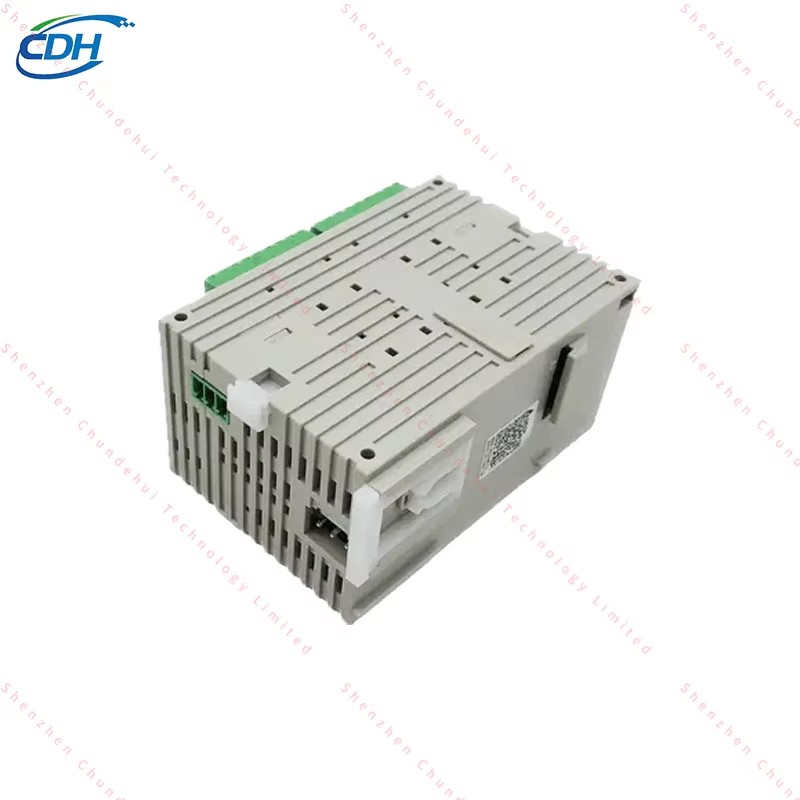
In November 2024, the plant engineering team consulted Shenzhen Juquande Technology Co., Ltd. to overhaul the control architecture. JQD's engineering specialists analyzed the electrical load requirements and recommended replacing the unbranded hardware with genuine Delta DVP-ES3 Series CPU Units and Slim Digital I/O Expansion Modules, paired with high-efficiency frequency inverters and motion drives.

Results and Impact
- Zero Communication Dropouts: Robust optical isolation and high-speed bus backplanes eliminated electrical noise interference.
- Immediate Payback: The replacement hardware investment of 18,000/month in downtime losses, achieving full payback within 6 operating days.
- Reduced Total Cost of Ownership: Over the subsequent 12 months, the plant operated with 99.8% equipment availability, proving that strategic automation procurement delivers substantial lifecycle savings over low-price shortcuts. The overall industrial control parts cost dropped significantly when evaluated over the full operational year.
7. Optimizing Automation Procurement for Maximum ROI
Executing a successful automation procurement strategy requires close alignment between procurement specialists and electrical engineering teams. To achieve optimal component reliability while managing capital expenditure, follow these operational best practices:
1. Mandate Rigorous Supplier Verification
Ensure your component supplier provides genuine, traceable automation hardware. Partner with established distributors that maintain transparent sourcing channels and substantial physical stock. Controlling industrial control parts cost starts with supplier integrity.
2. Standardize on Proven Control Platforms
Standardizing machine platforms on mainstream architectures—such as Delta DVP/AS Series or Siemens S7-1200/S7-1500 Series—reduces spare parts inventory, simplifies technician training, and streamlines software development. This standardization dramatically lowers the long-term total cost of ownership.
3. Evaluate the Complete Electrical Control Ecosystem
Look beyond the CPU unit. Ensure that digital and analog expansion modules, power supplies, sensors, and motor drives share compatible electrical ratings, certified isolation levels, and matched communication protocols. A holistic hardware approach lowers total cost of ownership across your fleet.
4. Leverage One-Stop Engineering and Sourcing Services
Partnering with a specialized supplier that offers technical support, circuit design assistance, and rapid component substitution helps eliminate selection errors before hardware arrives at your panel shop. Professional support mitigates unexpected industrial control parts cost increases during commissioning.
By balancing initial unit pricing with long-term reliability and engineering efficiency, companies can effectively control their true industrial control parts cost, optimize automation procurement workflows, and achieve sustained competitive advantage.
8. Quality Assurance & Certifications
To ensure absolute operational safety, electromagnetic compatibility, and regulatory compliance across international markets, authentic industrial automation hardware complies with stringent global testing standards:
- CE Marking (Conformité Européenne): Verifies full compliance with European Low Voltage Directive (LVD 2014/35/EU) and Electromagnetic Compatibility Directive (EMC 2014/30/EU).
- UL Listed / cUL (Underwriters Laboratories): Rigorously certified for electrical fire safety and industrial control panel safety standards (UL 508A / UL 61010-1).
- ISO 9001:2015 Quality Management: Guarantees systematic manufacturing controls, component traceability, and multi-stage testing protocols.
- RoHS & REACH Compliance: Restricts hazardous environmental substances in electronic components, ensuring environmental safety throughout the equipment lifecycle.
When selecting industrial automation products, verifying these certifications ensures that your equipment meets all legal and operational requirements across global manufacturing facilities, thereby reducing your risk-adjusted total cost of ownership.
Conclusion
Choosing industrial control components solely based on the lowest initial price tag creates an illusion of savings that quickly dissipates when faced with real-world downtime, engineering delays, and premature hardware failure. By adopting a comprehensive total cost of ownership mindset and partnering with a trusted automation supplier, manufacturers and OEMs protect their brand reputation, maximize equipment uptime, and achieve long-term profitability.
Understanding every dimension of your industrial control parts cost empowers your organization to make data-driven decisions. Investing in professional automation procurement ensures that every machine leaving your facility delivers dependable, world-class performance.
For genuine PLCs, HMIs, inverters, and expert automation engineering support, explore our extensive inventory and technical solutions at Shenzhen Juquande Technology Co., Ltd..
Table of Contents
- 1. The Low-Price Trap in Modern Automation Procurement
- 2. Unplanned Downtime: The Dominant Cost Driver
- 3. Engineering and Integration Hidden Expenses
- 4. Supply Chain Vulnerability and Lifecycle Obsolescence
- 5. Strategic Sourcing Comparison
- 6. Real-World Case Study: Automotive Packaging Line Modernization
- 7. Optimizing Automation Procurement for Maximum ROI
- 8. Quality Assurance & Certifications
- Conclusion