
 EN
EN



Introduction
When a production line automation project begins, the first risk is not budget or lead time — it is silence. Teams replace a control system without first asking the right control system questions, and the resulting specification is either too vague to price or too narrow to last. This article gives plant managers, maintenance engineers, and procurement teams twelve structured control system questions that turn a vague upgrade into a clear, comparable requirement.
The questions below are ordered the way a real upgrade project unfolds: from the process itself, through the control architecture, and finally to acceptance and support. Ask them early, and the technical enquiry you send will attract accurate answers instead of approximation.
Why a structured set of control system questions matters
Most delayed production line automation projects stall because the buyer and the supplier are solving different problems. A structured set of control system questions closes that gap. Instead of describing symptoms ("the line keeps stopping"), the buyer describes requirements that an industrial control system can be measured against.
A second reason is commercial. When every supplier receives the same control system questions and answers them in the same format, their quotations become comparable. Without that discipline, production line automation buyers compare offers built on different assumptions, and the cheapest quote often proves the most expensive once the industrial control system reaches commissioning.
The 12 control system questions
Each question below is designed to be answered in writing before any supplier is invited to quote. Together they form a compact brief for a production line automation project.
1. What exactly must the industrial control system control?
List the machines, axes, valves, and conveyors within scope. Defining the boundary of the industrial control system prevents scope creep later, and it gives every supplier the same starting point for their production line automation response.
2. How many signals of each type are involved?
Count digital inputs, digital outputs, analog inputs, analog outputs, thermocouples, RTDs, and any pulse or high-speed counters. Signal count is the single largest driver of industrial control system cost, so an approximate count still produces a far better quote than a verbal estimate.
3. Which control architecture fits our maintenance capability?
Ask whether the production line automation project needs a compact PLC, a modular platform, a safety controller, a motion controller, or a distributed industrial control system. The right answer depends less on fashion and more on who will maintain it at 2 a.m.
4. What are the safety requirements?
Identify required safety functions, target safety integrity, and any mandated stopping categories. Safety is not an add-on to the industrial control system; it must be designed into the production line automation scope from the first question.
5. Which existing equipment must the industrial control system integrate with?
Older drives, weighing terminals, vision systems, robots, and plant historians all impose interface requirements. Mapping them now prevents the production line automation project from discovering an incompatibility during commissioning.
6. What network and communication protocols are required?
Decide whether the platform will use a fieldbus, industrial Ethernet, serial links, or a mixed topology. Protocol choices affect both hardware and the skills needed to support production line automation over its lifetime.
7. What are the environmental and enclosure conditions?
Temperature, humidity, dust, washdown, vibration, and hazardous-area classification determine enclosure type, ingress protection, and cooling. These control system questions are often skipped, yet they reshape the hardware list more than any other factor.
8. What human-machine interface and data requirements exist?
Clarify the operator screens, alarm philosophy, trending, and any reporting or historian needs. A production line automation project that ignores data collection often needs a costly second phase, so raise it inside the industrial control system brief.
9. What diagnostics and remote-support needs apply?
Ask how the industrial control system will report faults, whether remote access is required, and how logs will be retained. Good diagnostics shorten every future production line automation downtime event.
10. What is the spare-parts and lifecycle strategy?
Confirm which components need on-site spares, what the expected service life is, and whether the industrial control system platform has a documented migration path. These control system questions protect the production line automation investment long after installation.
11. What acceptance tests and performance targets apply?
Write down cycle time, uptime, changeover, and scrap targets, then agree how each will be measured. Acceptance criteria turn vague expectations into a fair test for the industrial control system.
12. What training, documentation, and handover is included?
Ask what drawings, backups, and training the supplier provides. A production line automation project is not finished when the industrial control system starts; it is finished when the plant team can run and maintain it.
Grouping the control system questions by project stage
Grouping the twelve control system questions helps a team work through them efficiently:
| Stage | Control system questions | Owner |
|---|---|---|
| Define | 1, 2, 7 | Production and maintenance |
| Design | 3, 4, 5, 6 | Engineering |
| Specify | 8, 9, 10 | Engineering and procurement |
| Accept | 11, 12 | Operations and quality |
Working through this table converts scattered opinions into a single production line automation brief that any competent supplier can answer consistently.
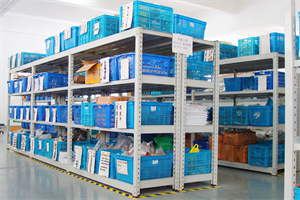
Caption: Official website asset — representative factory environment imagery, not tied to a specific project.
Running a workshop around the control system questions
The fastest way to answer the control system questions is a single focused workshop instead of a long email thread. Invite production, maintenance, engineering, and procurement, and set a hard two-hour limit. The goal is not a perfect specification; it is a documented first draft that suppliers can price.
Prepare the facts first
Gather three things before the meeting: a current process description, a rough signal list, and any as-built drawings. Even partial drawings reveal interfaces that would otherwise surface late. With these in hand, the team can work through the control system questions in order without stopping to search for information.
Give every answer an owner
Assign a named owner to each answer. Production is accountable for throughput and changeover targets, engineering for architecture and integration, and procurement for commercial terms. Clear ownership stops the document from becoming a list of open items that never closes.
Record assumptions, not silence
Where a fact is unknown, write down the assumption and mark it for verification. A written assumption is far safer than an empty cell, because it tells a supplier exactly where the ground is firm. A brief built this way is honest about uncertainty and easy to update as facts arrive.
Merge the answers into one document
After the session, consolidate everything under four headings: process, architecture, environment, and acceptance. Circulate it for a single round of comments, then freeze it as the enquiry pack. Freezing the pack before suppliers are invited prevents the moving-target problem that disrupts many line-replacement projects.
Revisit the control system questions at each project gate
The answers are not static. Return to them at design review, at factory acceptance, and at handover, and record any change in a small revision log. This keeps the brief and the delivered system aligned, and it gives both parties a fair record if scope genuinely shifts. However, do not let the workshop drift into detailed design. The purpose is to describe requirements, not to select part numbers; component selection belongs with the supplier's engineers, who can propose an architecture that meets the stated requirement and remains serviceable.
A workshop run this way takes one afternoon and routinely removes weeks of clarification. It is the difference between a project that drifts and one that stays on schedule.
Illustrative scenario — replace with verified customer data before publication
In January 2025, at a food-processing plant near Valencia, Spain, a production line automation team replaced an ageing industrial control system on a filling and capping line. Before inviting quotations, the engineers answered all twelve control system questions in a two-page document. They recorded 96 digital points, 14 analog channels, four servo axes, and a required changeover target of twenty minutes. Because the brief was complete, three suppliers returned comparable offers, and the plant selected a partner on lifecycle support rather than on price alone. The production line automation project reportedly reached its uptime target within the first month.
This scenario is illustrative and intended to demonstrate the method, not to describe a verified customer. Replace it with documented project data before publication.
Turning the control system questions into a supplier brief
Once the answers are assembled, they become the core of a technical enquiry. A cross-border partner that offers product selection, control circuit design, PLC programming, system assembly, installation guidance, and troubleshooting support can respond to such a brief with an industrial control system architecture rather than a loose price. Review the AI Omni Control product range to see how PLCs, HMIs, drives, servo systems, sensors, and complete electrical control cabinets map onto the twelve control system questions above.
A clear brief also protects the buyer during production line automation execution. When expectations are written down, scope changes become a conversation about facts rather than memory. Visit the AI Omni Control main site to understand the engineering support available alongside the hardware.
Quality Assurance & Certifications
Certification requirements for any new industrial control system should be confirmed for the exact product and application before ordering. A production line automation project may need ISO 9001 quality management, CE marking for the European Economic Area, UL, or country-specific approvals, depending on destination and equipment. Because these requirements vary by product family and market, always request the certificates that apply to your industrial control system and confirm them within the final quotation.
Conclusion
A new industrial control system is a long-term decision, and long-term decisions reward good control system questions. Ask the twelve control system questions before you request prices, record the answers in one document, and share that document with every supplier. That single habit improves accuracy, shortens production line automation lead times, and makes the resulting industrial control system easier to support for years. Production line automation succeeds when the questions come first and the equipment second. It also shortens commissioning, because engineers then spend their time configuring an industrial control system rather than guessing what the plant intended.
Table of Contents
- Introduction
- Why a structured set of control system questions matters
-
The 12 control system questions
- 1. What exactly must the industrial control system control?
- 2. How many signals of each type are involved?
- 3. Which control architecture fits our maintenance capability?
- 4. What are the safety requirements?
- 5. Which existing equipment must the industrial control system integrate with?
- 6. What network and communication protocols are required?
- 7. What are the environmental and enclosure conditions?
- 8. What human-machine interface and data requirements exist?
- 9. What diagnostics and remote-support needs apply?
- 10. What is the spare-parts and lifecycle strategy?
- 11. What acceptance tests and performance targets apply?
- 12. What training, documentation, and handover is included?
- Grouping the control system questions by project stage
- Running a workshop around the control system questions
- Illustrative scenario — replace with verified customer data before publication
- Turning the control system questions into a supplier brief
- Quality Assurance & Certifications
- Conclusion